
Getting someone out: $80–$180
Standard Sydney call-out for after-hours attendance. Ask before booking, not after the invoice.
The first thing that happens is not a booking. It is a plumber telling you what to shut off right now, because the minutes before anyone arrives are where most of the damage is either done or prevented.
After-hours work is not the same trade as daytime work. The parts have to be on the van because no supplier is open, the diagnosis has to be right first time because there is no second attendance that night, and the person answering the phone has to be able to tell a genuine emergency from something that is cheaper on Monday.
That last part matters more than it sounds. Telling you a job can safely wait costs us the callout and saves you a premium, and it is the fastest way to know whether the outfit you have rung is worth using again.

If the fault turns out to need digging, loose ground changes the job: trench walls do not hold, so a hole that would stand unaided elsewhere needs shoring, and that is not after-hours work.
What tonight can do is clear, camera and make safe. Anything structural gets scoped properly in daylight, and we would rather say that than start something at 11pm that cannot be finished safely.
Two separate systems run under most properties around Clontarf: stormwater, which takes rain from roofs and yards, and sewer, which takes everything from inside the house. They are not supposed to meet.
The established trees shading Sandy Bay Road and Clontarf Reserve drive roots into ageing clay joints, the most common blockage we clear here.
When they do — an illegal connection, a cracked line, a surcharging pit finding its way into the wrong pipe — heavy rain overwhelms a system never built for it, and the symptoms appear indoors. Working out which system has actually failed is the first thing we do, because the repair, the cost and who is responsible all follow from it.
Rain sluices off the steep sandstone slopes toward the harbour, overloading pits and gullies on the lower streets near the beach.
On sloping ground the problem is rarely where the symptom is. Water leaves a failure at the highest point and surfaces at the lowest, which can be several properties away and well downhill of anything you would think to look at.
It is also why a neighbour's overflowing gully is sometimes your blocked line, and occasionally the reverse. We work uphill from the symptom rather than digging where the water appears.
One slow basin is a local problem. Toilet, shower and floor waste misbehaving together means the shared line downstream, and on older earthenware that is the usual pattern.
Many harbourside rebuilds still drain through the original mid-century clay sewers, which crack, sag and snag waste long before anyone realises.
It also changes the urgency. A single blocked fixture can wait for morning; a main line with nowhere to go will find the lowest opening in the house, and that is usually a floor waste in the bathroom.
Stop using water anywhere in the house. Every flush, every sink and especially the washing machine adds to whatever is already sitting in the line, and a machine mid-cycle is the single most common way a slow backup becomes a floor to mop.
If there is an overflow gully outside and it is running, that is the system doing its job and keeping it out of the house. Leave it clear and let it work until we arrive.
Fine sand washes and blows into stormwater pits and lines and settles wherever the flow slows. Clearing it restores the drain the same day, which is genuinely useful, and it does not stop more arriving next season.
The question worth asking after the emergency is whether the line has a low point holding it. Sand collecting evenly is maintenance; sand collecting at one spot every time is a gradient problem.
Standard Sydney call-out for after-hours attendance. Ask before booking, not after the invoice.
Roughly $120–$160 in daylight. Someone is out of bed and on the road, and the rate reflects it.
Where most single-fault after-hours jobs land once attendance, labour and small parts are counted.
Slab leaks, gas line work, anything that means opening a wall overnight. You approve the figure first.
We would rather book you for Monday at daylight rates than take a premium for a job that was never urgent.
These are market ranges, not our quote. You hear your number first and decide with it in front of you. Figures here are indicative of the 2026 Sydney market rather than a quote from us, you get your own number as a fixed price before any work starts.

Not a call centre. You describe what is happening, we tell you what to shut off right now, and whether this genuinely needs someone tonight. Sometimes it does not, and we say so.
The nearest available crew heads for Clontarf with the common failure points already stocked on the van: pipe, fittings, valves, drain gear.
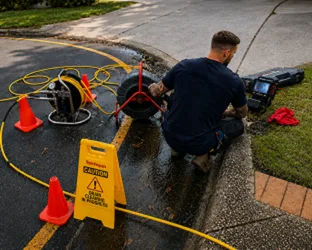
First job on site is stopping the damage: isolate, contain, make safe. Then you get a fixed price for the proper repair before it starts.

Most emergencies are permanently repaired on the spot. If a part has to wait for a supplier, you are left safe, watertight and functioning in the meantime.
Leave your details and an on-call plumber rings back. You will get instructions on what to isolate before anything else.
Cost, response times, and what actually counts as an emergency.

Phone is quickest at night. The form works too and reaches the crew covering Clontarf rather than a national call centre.

Leave your details and our local Clontarf team will call you back fast.